Showing posts with label sales. Show all posts

Thursday, 8 December 2016

Santa on Selling

Santa in 1881 by Thomas Nast
Everyone knows Santa Claus. Red suit, long white beard, familiar laugh and long-time leader of all things North Pole. For some strange reason, most don’t have a clue as to the early days of his career. So let me break it to you, Santa got his start in sales. A long time ago, hundreds of Christmases before occupying the big chair in the corner office up at the North Pole, Santa worked on the selling side of North Pole Distributing.

Like many hardworking sales types with hundreds of years under his belt, Santa leveraged all the lessons learned in his territory to move up in his organization. Playing a front and center role in a global distribution organization with customers around the globe, Mr. Claus puts those lessons to work almost every day.

It’s difficult for a lowly industry consultant to get an audience with big time executives, but last week I leveraged over six
Photo Credit: GM
decades worth of being on the nice list to score a rare opportunity to speak with Santa in his North Pole office. I wanted to impress. So, rather than humdrum questions – the kind most people ask – I set out to do something different. Skipping over the normal topics of reindeer care and feeding, keeping the Elves busy in the workshop and the naughty and nice kids’ lists, I asked Santa about early lessons from way back in time. Those old days when he was a rookie sales guy for The North Pole.


Here are the highlights of our talk. Whenever possible, I am using direct quotes from the Jolly Old Elf himself.

Santa on Targeting:
You know Frank, I share your views on targeting. Years ago, we here at North Pole Distributing decided we couldn’t do everything. You call it targeting, we call it the naughty and nice list. There are just too many kids out there for us to deliver presents to everybody. So, we started what the elves call “the list.” We do our best to take care of the nice boys and girls and let the naughty ones get their presents somewhere else. In the past couple of hundred years, we’ve further refined our customer-base to exclude moms and dads. You may have noticed that sometime back in the 70s we took you off the list because, well, you were just simply getting too old.

For some it doesn’t make sense, but the North Pole Distributing team is devoted to providing the best of service to a targeted group of customers. They love us, we love them and it helps us do a better and more efficient job.

Santa on Customer Service:
The whole North Pole organization thrives on providing the best customer service on the planet. For as long as Ole’ Santa Claus is sitting in this chair, I have stressed the importance of getting the right toys to the right girls and boys on Christmas Eve. It’s our mission, vision and creed all rolled into one. The Elves sometimes get sick of hearing me say it. But every time we break for chocolate and cookies, I feel compelled to bring up customer service as Numero Uno. Every break in a reindeer game, Rudolf and his crew hear me retell the story. On time delivery is only part of customer service. There can be no disappointments.

Santa Says Under Promise and Over Deliver:
Remember the time you asked for an Electric Train way back
when the Kennedy lived in the White House? I can still recall. You and your grandpa dropped by my shop and you looked old Santa in the eye and said, “Santa, I have been good. I brush my teeth, do my homework and I am nice to my little brother. Can I have an electric train?” Remember what Santa said? I told you, we’ll see if the elves can come up with something like that. I learned that approach back when I was a seller. I knew the elves were running behind on train sets and I knew your parents were planning on buying you one for your birthday on January 23rd. Seems like I brought you a really cool sled that year, and since the snows were waist deep to a tall Elf, you had tons of fun. That’s how the North Pole works; under promise, over deliver. Even though you didn’t get that train set, you were all smiles with the sled.

Santa on Tracking Customer Data and CRM Systems:
Up at the North Pole, customer data is king. Or at least right after Santa Claus, it’s king. We’ve been doing the naughty and nice list for eons now. Back when we started the practice, it was all paper. Lots of manual entries, teams of elves checking the lists and then checking them twice. In our business, knowing who’s naughty and who’s nice is pretty darned important.

I started the practice back when I was handling the small Schleswig-Holstein territory in Germany. I was struggling to remember all the kids and their behaviors and Mrs. Claus suggested writing a list. In retrospect, she was questioning my memory way back then; that’s how loving spouses can be. It turned out to be a great idea so I brought the entire
concept to the North Pole. Over the years, we’ve fine-tuned it and a few years ago, one of the elves in our computer department modernized the whole thing. We never miss a naughty or nice and never need to check things twice.

My time was short, Santa and his Elves are pretty darn busy this time of year.
Just like back in the old days, my time with Santa just zipped by. Our scheduled hour seemed like just a couple of minutes. Along the way, he pointed out when I almost slipped onto the naughty list, mostly for fibbing, but somehow I managed to stay in Santa’s good graces through all these years. As the time was ending, I asked Santa if he had any final words for the good girls and boys across distributor-land. Here are the Jolly One’s final words…

Enjoy your Holiday Season…
Make Merry with your Friends

and Family…
Make plans for a Happy 2017…

Ho, Ho, Ho….

Authors note: Santa and I have enjoyed a special relationship through the years. Based on the way they talked about things going on down at the Eagles Club, it seems my Grandpa was a close, personal friend of Santa. My own grandkids have noticed that I know Santa too. Hopefully, you haven’t lost touch.

Tuesday, 19 July 2016

The Life and Times of an Elephant Hunter

Last week I had the opportunity to meet a real live Elephant Hunter. No, not the African Safari kind, this elephant hunter
was of the sales variety. After years of bouncing from manufacturer to distributor and back, he called me to help him find his next opportunity. During the normal introductory niceties, (contrary to my wife’s opinion, I am a nice guy,) he boasted about a dozen or so really big deals he had singlehandedly managed during his two decade career. Make no mistake, this made an impressive list. I was buying into his story hook line and sinker. Until, we reached the point where I asked him, why he was looking for a new opportunity.

For some reason he didn’t share upfront, he was currently “between jobs.” With this impressive list, one would wonder how such a rain-maker could possibly be out of work. I know lots of sales organizations and very few willingly separate ways with someone who can really bring in business. It made me scratch my head. I asked him about it and the answer was shocking, he said my last couple of deals didn’t come through and my business dropped off substantially.

For distributors in his industry, business can be divided into “project” business and flow business. Even during the darkest hours of the Great Recession, the flow business for most customers continued to roll in. The ratio for a healthy end-user customer looks something like 70 percent flow and 30 percent project. Things look slightly different for OEM customers, but even there most have some flow business remaining.

About fifteen minutes into the conversation, I explained my thoughts on flow business and asked if I was missing something. After a long pause, I heard a reluctant story of no time to build a solid foundation of long term repeat business. This guy prided himself on bringing every resource possible toward capturing the big deal. He felt pursuing what he termed as “piddle” routine stuff was better left for those small minded types who couldn’t hunt the elephants.


The truth about our kind of selling
One of the issues I have with many of the generic off-the-shelf sales training courses comes from the backgrounds of the instructors. Many industries thrive on “one time” sales. The sale is an event rather than a process. For distributors, it works differently. Our sales strategy is a continuous string of discovering customer needs, proposing a solution, assisting with implementation of the solution and repeating the process. Over the years, we develop customer trust, build loyalty and grow our flow. We strive for what some call “customer wallet share.” When things go well, our ongoing actions entice the customer to purchase more from us because they know we desire the orders.

Capturing projects has a place in our world, but only after we have built a solid groundwork of customer knowledge, relationship and trust. Chasing projects which just happen to come floating across our desks is often an exercise in futility. We waste our time and resources developing complex quotes for business with little chance of success. Further, negotiation experts like Anthony Perzow of SPASigma indicate some of our quotations are simply used as rabbits to drive down the price of the guy the customer really wants to buy from. The rabbit has zero chance of closing the order. In a day when most distributors are fighting to channel resources, time spins down the drain.

What should we be doing?
Targeting the right customer list for our efforts makes sense.
Building a relationship and trust takes time. If we spend our time on customers with little potential, the payoff never comes.
Asking the right questions and gathering customer data pays off as well. Nothing accentuates our relationship with a customer like understanding their business. The more we know about the customer’s unique situation, the better our chances of providing valuable solutions.

Understanding our competitors on an account by account basis helps us better position ourselves. We must recognize why the customer buys from others. This is especially important if you “split” the business with several competitive distributors at an account.

Harnessing the efforts of our supply-partners builds our portfolio of business. Very few distributors enjoy exclusive supplier relationships. Protecting business against cross-channel conflicts preserves our margins and frees supply-partners salespeople to work directly in building your position at the customer.

Focus, but don’t be an elephant hunter…
It’s our job to capture as much business from our territory as possible. I believe focus is important. For most distributor salespeople, this means focusing in on 30-40 accounts. Elephant hunters want a list of 200 accounts so they can search for the jumbo sized orders as they appear. Working to create a relationship with 30 or so accounts gives you time to develop the relationship, grow the flow and when the elephant appears take it down in the normal course of business.

What happened to my newly found elephant hunting friend? I am not sure any of this advice sunk in. His last words were something to the effect of... “When the economy picks up, the big orders will come back and I will be there.” I only hope he has enough money to survive in the meantime.  I have a feeling he'll be singing the old Hoyt Axton song "Where did the money go?"

Friday, 11 March 2016

Are you doing business with OEMs?

Does your OEM customer view spare parts as a revenue stream?   Solution sellers should know the answer to this
You and your customer can share
a love of those spare parts!
very simple question.   Strangely, perhaps even sadly, many distributor sales guys have never fully explored the question.  In their daily struggle to get parts specified, solve technical issues and sometimes baby-sit orders flowing from the customer, they overlook an opportunity to move up the supplier food-chain. 

For review let’s look at the types of folks selling to our customers:
Type of Supplier
Customer Perception
Vendor
A company we send lists of materials to and sometimes make purchases if the price is right and delivery schedules meet our needs.
Supplier
A company we regularly purchase from because they appear to provide a competitive price and good service.
Valued-Supplier
A company we do more business with because their products and services eliminate hassles from our world.  These people provide technical guidance, value-add services and other assistance in a way that complements our in-house team.
Business Partner
A company that helps us make more money.  They perform services which help us make more money and are our competitive advantage in the market.


Perhaps a bit of soul searching may be in order as to where you fall in this category.  I suspect that most self-described “solution sellers” are really performing in the Valued-Supplier space with their best customers and at the supplier or vendor level for the rest.

Think differently, push to the Business Partner level. 
You need to understand how your OEM customer views spare parts.  Are they a profit center, source of service revenue or just a hassle they would like to dispense with?  All three of these have opportunities for you to help them build their business.  Let’s break it down.

OEM sees Parts as a Hassle
What would happen if you knew the machines your product was used on and had their internal part numbers in your ERP system?  When the OEM receives a call for the part, they could simply push the customer over to you and your organization’s inside sales team could quickly identify the right part, convert the conversation to an order and solve the OEM’s customer issue.  End of problem.

What’s in this for the OEM, better satisfied customers and less time spent searching through catalogs to reference the right part?  If you had a copy of the OEM’s drawing, you could provide advice on auxiliary components often overlooked (things like mounting brackets and bushings.)   For the distributor, there is enhanced margin because typically, customers searching for this type of part, are not price shopping.  The customer gets increased uptime and clears the problem sooner.  A win-win-win solution.

OEM sees Parts as a form of Service Revenue
If the OEM sees parts and part replacement as a form of service revenue, you are presented with a slightly different set of opportunities to assist the customer.  First, end customers consider it an irritant if the service person arrives without the necessary parts to make the repair.  How do we address that?  What if the distributor assisted with standardization of parts used in the design?  Would it be simpler to insure the parts were available?  If there are a sub-set of parts used, which are the most common failures?  You might assist in identifying them and perhaps putting together a traveling kit containing most commonly failed parts.  Further, you might provide the service people with “recommended spares” which the OEM could provide to the end customer.  You create the list and package the products as an “add-on” to their service work.  Again, improved profitability for the OEM who marks up your recommended spares list and nice business for you. 

OEM sees Parts as a Revenue Source/Profit Center
This is the greatest opportunity ever.  Typically, OEM operations are not good at maintaining inventories and operating distribution centers.  For distributors, it’s our middle name.  Let’s explore some of the scenarios.

The OEM receives an order and you fulfill it from your warehouse. 
In most instances, this eliminates a middle step, where you ship to the OEM and they ship out to the customer.  Time, money and effort are saved and the customer gets the part a couple of days earlier.  Further, many of the better distributor ERP systems allow for your company to print packing slips which mirror the OEMs own system.  You ship, bill the OEM and everybody makes more money. 

The distributor works with their suppliers to create exclusive part numbers for the OEM.
Each of these new part numbers lock the OEM’s customer into purchasing them from the OEM rather than on the open market.  This enhances the OEM margin and sweetens the pot for the distributor by locking out other distributors jockeying for the business. 

You build exclusive sub-assemblies for the OEM.
Since many distributors are assuming value-add responsibilities for nearly all of their customers, what if you slapped a high quality label on parts to identify the OEM sub-assembly and then offered up your ability to provide these quickly as needed in the field? 

You hold obsolete components to extend the operating life of machines.
In many industries, manufacturers change revision levels or otherwise change the configuration of their products regularly.  This creates issues for their end customers and tracking hassles for the OEM.  Think about ways you might address the issue by holding back inventory or working to find alternative sources.  


What’s in this for You?
First, showing an interest in something besides just selling more sends a message to the customer.  You are really a solution seller.  Secondly, you learn more about the internal workings of the customer.  Going through the exercise will very likely lead to other opportunities.

Finally, the best person to discuss this type of issue with will fall in the management team of the OEM.  This opens the door to better relationships with those responsible for writing the checks to your company.  These management types begin to understand that you provide solutions far above the normal “good service” and “smart people” played up by your competitors.  You win substantial street cred for your efforts and those pay dividends into the future.

Before we go
It’s not uncommon for OEMs to mark-up the spare parts they sell by 250-400 percent.  It would seem reasonable to
assume the OEM should be able to pay more for products sold this way, especially if you helped them develop their own business or streamline the process.  You should negotiate better margins for your efforts. 


Tuesday, 8 September 2015

Fairy Sales: The Princess and the …


As with all fairy tales, this one happened once upon a time in a land not so far away. There, of course,
was a princess who was quite obviously a mix of hillbilly and ridge-runner descent. Her mother, in a fit of rage or depression, named her Gerpruda, Princess Priscilla Gerpruda XIII to be exact. Anyway, this Princess Gerpruda (the thirteenth) lived in Never-Never Land. (Never-Never turn down a Sales Opportunity and Never-Never think outside the box-land-that is.)

Gerpruda lacked typical royal charm and beauty. At the age of 37, her parents thought an intervention was necessary to find a proper suitor.

A decree was made and a call went throughout the land for a suitable prince to wed the lovely Priscilla Gerpruda. After twelve years and two months, it appeared there was truth to the rumor that all of the potential “Prince-ton” material had been turned into frogs by a neighboring wizard.
In ‘88 the Wizards and Warlocks Frog Turning Competition had been held on the palace lawn, causing a disturbing disappearance of men of reproductive age.

There was also buzz that the enchanting Princess (affectionately known as PG-13) had a penchant for groping reptiles and amphibians. The only cure for her fatal attraction was to kiss the right frog that would turn into her prince charming.

And after countless cold blooded dates, Gerpruda began to wonder if a “happily-ever-after” solution existed. She was still determined to find out.

Frog kissing, as you can imagine, is an art. Our Princess, however, was no artist. After embracing countless frogs, the aggressive paramour realized that every frog kissed does not a prince make. And the warts left from locking lips from multiple frog partners made Godzilla’s back look smooth and refined.

Despondent Gerpruda felt helpless and alone. She debated suicide or a career change. She even thought about becoming a purchasing agent. But after a stern talk with herself and the royal psychiatrist, she opted to try her luck at the local watering hole. Her reputation grew quickly as she began swapping spit with even more frogs, and anything remotely green with a pulse.

It was upon a drunken journey home one evening when Gerpruda came across her Fairy Godmother in the roadway leaning against a rusty Oldsmobile (it really was a long time ago.)

“Gerpruda,” warned her godmother, “Let me give you some advice. Stop wasting your pucker power on every Tom, Dick and Harry frog you come across.”

Fairy Godmother waggled a bony finger under Gerpruda’s nose - avoiding the warts. “You can’t keep doing this,” she scolded. “I don’t care what tradition or fairy stories tell you. You can’t keep throwing yourself at everything that hops. You need strategy.”

Gerpruda wiped frog spit from her moustache. “But Fairy Godmuscher,” she slurred through the bourbon. “How do I know which frogs to kishsh? I’m no expert you know.” She weaved clinging to a leaning lamp post.

“You’re a mess” opined the disgusted FG. She whispered into Gerpruda’s ear, “Perhaps you should think about looking at the articles I’ve been sending you about targeting prospects. Try kissing frogs with a greater interest in becoming a prince?”

Failing in looking indignant or even standing erect, Gerpruda retaliated hotly, “Get loshht you old hag. You jussht wait and schee, FG. I’ll find my prince charming. Now get out of here before I call a cop,” slurred the sloshed pedigree.

After waving her wand and tossing a hand full of magic targeting dust upon the stumbling Princess, FG departed.

Surprisingly, the next morning, Gerpruda was up and about, humming an off-key tune of indescribable agony and appeared to be ardently mapping out some sort of strategy.

Taken from Fairy Godmother's Guide to Targeting a Frog Prince, her results looked something like this:

Attributes of Frogs that might be Prince Charming:
• Upon lilly pads close to the Castle
• Eating flambé’ not flies
• Sporting crowns not caps
• Wholesome complexion: NOT warty
• Fine, not flea bitten

A half hour later, Gerpruda took her station upon a bench near the castle lily pond. After patiently observing for a few minutes, a likely looking candidate in white knee socks, sneakers, Lycra sport shorts and a “toad top crown” hopped on the bench next to her. Never known for being coy, Gerpruda blurted quickly, “Want to be a prince?” as she scooped him up in her hand and planted a wet one on the terrified amphibian’s puss.

“Poof!” burst the frog. But rather than a handsome prince, there squatted a pot-bellied, cigar gnashing itinerant clothesline salesman in a cloud of blue smoke. “No way,” growled Gerpruda kicking him aside with her foot, “I can do better than that.” Gerpruda revisited her list....

Twenty minutes later, she had finally landed the Big One. He
was no George Clooney, but from a distance and in the right light, he may have slightly resembled Matt Damon, with his shades and if he didn’t speak or smile. Bells rang throughout the kingdom. The people rejoiced and wetlands increased by forty percent. Compound W sales tripled and everyone lived happily ever after. But that’s not the end…


The moral of the story?

(1) Never kiss just for the sake of kissing. There are lots of frogs out there. Spend time describing your perfect prospect and you will save yourself lots of effort and a face full of warts.
(2) Count your costs. Don’t settle for a pot bellied, cigar smoking partner in a knee socks when there are royals to be had for the price of a kiss in the right place.
(3) Customers can be cold blooded until you find the one who responds to what you’re offering. The right connection can be a marriage made in the Enchanted Kingdom.

It’s all about spending a little time up front targeting your market. Stop kissing every donkey you see and check out the frogs next door. Listen to your Fairy Godmother or in this case your GF … Godfather Frank.

Monday, 8 June 2015

The Specialist – Expand your sales with the Niche

“Find a niche and work it!”
“We are a niche player.”
“Our niche is small.” 

Work in distribution for any length of time and you will hear one of these phrases bandied about.  Generally, when distributions hear the word – niche – they think of a small company calling on a very narrow segment of business.  To illustrate the point, here is what many people would consider a “niche”:  A distributor who works exclusively in providing lighting products to gas stations.   Small, very narrowly focused and expert are all descriptions that come to mind.

I suggest Specialists change their definition of niche.  What if we developed “niche products?"  We change the definition from customer types to product groups to achieve this new mentality.  When a full line Electrical Distributor takes on a product which has very limited application appeal, we have a “niche product."  The new niche would consist of products not destined to be sold to everyone - products served up to a very select group of customers, say 10 or 20 highly targeted accounts.

Manufacturers report that distributors traditionally don’t do well with this type of product.  At the root of the problem lies the very nature of most distributor sales organizations.  Products are presented to a group of salespeople and a number of generalized applications are discussed.  If the product doesn’t have mass appeal, it gets lost in the shuffle.  Within a couple of weeks of the product launch, the product becomes long forgotten somewhere in a pile of catalogs.  When stock orders are involved, it sits collecting dust in that special odd ball section of the warehouse.

Because niche products offer an outstanding opportunity to expand your business during these trying economic times, now is exactly the right time to change your thinking. Three very compelling reasons make this true.


Niche products earn high gross margin dollars
By their very nature, niche products are high gross margin items.   Limited competition and lack of buying history put these into a class all their own.  It is not uncommon to find gross margins which are double the industry average. 

Niche products provide extra value to existing accounts
Problem solvers that solve a specific problem best describe the product niche.  During poor economic times, customers appreciate your efforts in locating a “better mousetrap."  Because they solve a problem, eliminate labor costs, or eliminate the need for outsourcing, all of these create intrinsic value that can be measured in dollars.

Niche products are often purchased from no-service or low-service competitors
This type of product is traditionally not sold by a tough competitor.  Instead engineering and maintenance departments find them via “Google search."  And, often the product must be purchased with a great deal of hassle-factor.  Because this may be the only product of its type purchased from their current supplier, prices are high and service is marginal at best.

The Question
With all of these compelling reasons to get involved in niche products, why have distributors traditionally faired so poorly in selling them?  While a number of factors weigh in the answer to this question, solid evidence points to lack of a product-oriented targeting process.  Specialists provide the best and most efficient means for establishing a meaningful target process at this level.

Product Targeting is achieved when products, potential application problems and customers are closely aligned.  While most supplier reps understand the ins and outs of their products, they often lack a detailed understanding of exactly where the product is applied to the customer’s needs.  Their territory size does not allow for detailed customer level knowledge.  To illustrate this point, let’s imagine a new product designed for underwater lighting.  The supplier rep typically understands the product specifications – the ability to withstand water pressure to 30 meters, the ability to create 5 lumens, etc.  But he typically lacks the ability to tie underwater lighting to its useful applications in artificial crystal farming or some other local application.  Further, he knows very few details about the customers in your territory.  Any discussion of the product comes as a footnote in some larger product/sales meeting.  Salespeople don’t make a connection and no sales are generated.

Getting Started
As a Specialist you hold the key to making things happen – you provide a competitive advantage over other organizations.  By tying product, application and customer closely together, you can identify and close in on these opportunities during tough times.  They work best when implemented one-on-one with your salespeople.  Join me on the high rocky cliffs La Quebrada cove as we prepare our Acapulco-style swan dive into the process.

Step One – Identify the Product
Identify potential niche product targets from your existing lines.  Ask yourself, what cool product exists somewhere in the footnotes of the master catalog that might fall through the cracks – nearly every line has them but they never find their way into the spotlight.

Step Two – Brainstorm Potential Applications
Ask yourself these questions.  Where might this product be used?  Are there applications that fall outside the realm of normalcy?  How is the problem solved today?  Have I seen something similar but not as elegant?

Step Three – Identify Customers with Probably Applications
Explore potential customer applications with your sales team.  These often happen informally on the shoulder of other events such as joint calls, training sessions and trade shows.  A word of caution; your goal falls not on gathering dozens of customers but rather a small handful who happen to have special needs.  If a customer application is uncertain – move on.  This exercise works on quality not quantity.  Some salespeople will have no targets in their territory.

Step Four – Arm the Salesperson with Clarifying Questions
After selecting the product target customer, provide your salesperson with questions that can be asked during the course of normal business.  Things like; how is the problem handled today?  Or, does the customer still run his process in a particular fashion?

Step Five – Present the Product
Bill the presentation as the culmination of research conducted to add value, and you will achieve two things: a warm reception and good will even if the sale does not happen.   I recommend the Specialist participate in the first of these presentations.  Doing so will allow further refinement of the presentation and will allow you to gather potential competitive market information.  This may be critical to maximizing Gross Margin dollars.

Step Six – Document the Value
In tough economic times, documenting value only accelerates in importance.  If you were able to eliminate manpower, energy usage, outsourcing or something else, turn it into a mini-case study.  During a recession, customers want supply partners who improve their cash flow and eliminate risk.  Your efforts do both.

Ancient Chinese Proverb

An ancient Chinese proverb reads, “The man who chases two rabbits catches neither.”  
During a recession, many distributor sales teams “flail around” chasing after every potential new customer they can identify.  It must be remembered; expanding your sales to existing customers is five times easier than selling to a completely new customer.  Plus, niche product targeting builds your value with the customer which makes it harder for another distributor to steal your business.

Friday, 2 January 2015

Happy New Year

It’s a time for reminiscing

The big Times Square Ball is about to fall. 2014 slowly shuffles down Memory Lane; and 2015 boldly marches forward. The ghost of Dick Clark’s New Years Rockin' Eve shows past flash through the subconscious of America. TV pundits scour their previous 364 shows for memorable moments. Celebs step onto the red carpet and captivate us with half backed renditions of personal growth. Culture dictates this as the time of year for quiet reflection and forward thinking resolution.

Taking momentary advantage of this space in time, let’s reflect:

What new bit of technology did we discover in 2014?
I personally discovered the power of the mobile app. Mid-year I noticed a young salesperson pull out their tablet and walk a customer through the selection of a complex industrial sensor. With the assistance of the app, this relative neophyte seller displayed the product/application skill of a seasoned veteran. Get ready, this one will impact our world. This category could go on for a dozen pages.

What part of your customer’s world changed in 2014?
With all the pseudo-crisis activities blasting out on distributor news sites, scare tactic tweets and LinkedIn propaganda efforts, it’s easy to focus on what’s going on in our world. But isn’t it all about the customer? Here are a few points to ponder. Customers dependent on water are experiencing a drought. Companies relying on engineering expertise can’t find enough talent. Massively fluctuating oil prices give petroleum related companies unbelievable heartburn. How tuned into these issues are you?

Where you really selling solutions in 2014?
I recently read an article stating 70%+ of all distributors claim to be solution sellers. At the same time, experience dictates most distributor salespeople struggle to keep up with simple product knowledge. Most fail to understand customer pain points in a meaningful way. Think about orders won and orders lost. Were you selling, really selling solutions?

What value did you provide to your own organization in 2014?
Most readers will quickly point out increases in sales and gross margin generated. Great stuff. For most of the distributors reading, anything greater than an 8% growth number probably indicates you outgrew the market. But, let’s move deeper. How did you produce greater profitability? Did you do something that sets the stage strategically for coming years? How did your work increase the stock value of your company?

What do you wish you could have accomplished in 2014?
Don’t be shy. We all have at least one wish. I wish I could have finished my new book on building account based strategic plans. You have a few of these as well. Which were strategically important? What lessons might have been learned?

Let’s shift our focus from the past to the future. Looking ahead….

Why will it be easier and better to be your customer in 2015?
Pushing the old adage “What have you done for me lately?” forward, let’s think. What strategic service, product offering, technology tool or other offering will you provide your customer next year? Chances are more of the same doesn’t count. Further, putting together this competition killer of a plan will take some time. Wouldn’t now be a good time to start?

What will you do to make your competitor’s life more difficult in 2015?
Let’s assume you have some really difficult to duplicate competitive advantages. Your competitors fear you. Resting on last year’s advantage is not a good strategy. What strategic plans, investments, activities and positioning will be needed to make competing with you harder in 2015 than today?

What really important stuff should you accomplish in 2015?
I have every reason to believe 2015 will be an action filled year. Business is set to be brisk. Our customers will reward us with orders. Urgent crisis will come by the dozens. We must remain focused or meaningful advantage will slip through our fingers. The answers to our questions at the end of 2015 will not shine as brightly as they might have.


Before we go…
If you are not through planning for the New Year, I suggest you get started. Our Distributor’s Annual Planning workbook contains lots of tips, tricks and some of the right stuff to get your planning started. It is available here

We also have some other resources available electronically. They can be easily downloaded here.

Happy New Year

Tuesday, 23 December 2014

Knowledge-based Distributors Save Santa

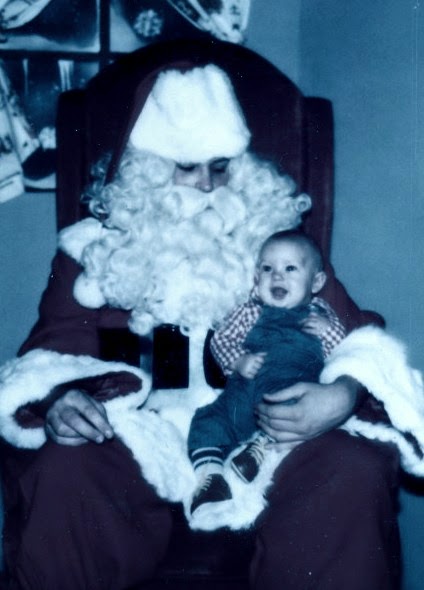
As we start our tale, we find ourselves in the 130 year old cottage which serves as the office of River Heights Consulting.  Frank Hurtte, the organization’s founder, seems totally absorbed in his work.  Glancing around the office, we see several mementos of Hurtte’s long association with Kris Kringle and the Santa Organization.  There’s a picture of Kringle carrying his legendary bag.  The likeness of Kris keeling in front of an ancient manger is prominently displayed near a time worn photo of a much younger Frank seated on Kris’ lap. 

The phone rings; the answer is a seasonal combination of Christmas Cheer and morning routine.  But in a flash, we see Hurtte spew some of his coffee and snap to attention.  The conversation goes like this:

FH:  River Heights Consulting, Frank Hurtte speaking.

Elf:  Frank, this is Elf Alabaster Snowball.  You don’t know me, but I know all about you, including that pouting incident back in 1962.  Kris Kringle and Santa have brought you lots of goodies over the years, like that Red Rider BB Gun way back when you were only 10.  And now we need your help.

FH:  Me?  I’m just a distributor guy.  How can I possibly help Santa and all my friends at the North Pole?

Elf:  It’s a long story, but Santa Enterprises needs some of that special Knowledge-based Distributor magic you are so fond of sharing with others.  Do you think distributors can help save Christmas?


For the next few moments, Elf Alabaster outlined the issues faced with parts shortages, machine down situations and the problems Santa’s kitchen faced with their spinach flavored sugar plums.  As a note taker, Frank listened, occasionally nodded in agreement and took copious notes.  Finally, Elf Alabaster Snowball asked, “Well, with all these issues, do you think distributors can save Christmas?”

Ever the consultant, Hurtte asked a few more poignant questions.  Logistics, delivery times and calculations rolled off his tongue like “On Comet, On Cupid, On Blitzen” out of Kris Kringle while driving the sleigh.  Working through a few issues on getting the right guys to Santa’s North Pole Headquarters and a couple thoughts on working special arrangements on territorial allowances, a plan was set.

River Heights Consulting and Santa Enterprises handpicked the top knowledge-based distributors in all the land.  Selecting on a basis of product knowledge, technical support, maintaining the right inventory, dedication to customer service and status on the naughty or nice list, an even dozen folks were plucked from a wide arrangement variety of wholesale lines of trade.  There were Salespeople, a couple of Product Specialists, a Customer Service Representative and Kris Kringle’s old pal Jimmy from the warehouse.

Because the North Pole is hard to get to by car, Santa Enterprises dispatched a team of reindeer to quickly shuttle each of these folks to the North Pole.  Time was of the essence.  The pressure was high, but this group has handled many a customer emergency.  Downtime, troubleshooting, part shortages, factory “work-arounds” and “making things happen” are part of the distributor skillset.  And while each member of this group could list hundreds of instances where they “saved the day.” none had ever saved such an important day.

Once at the North Pole, they met briefly with Kris and his team.  Everyone provided helpful information to describe their Elfian Department’s issues.  Well, almost everyone.  Elf Pricedrop was conspicuously absent from the meeting.  None of the other Elves said anything, instead they quickly shuttled the distributor team to the problem spots.

Quick as a wink, the group was making phone calls,
adjusting dials and pulling up drawings for alternative products on their iPads.  The hustle and bustle created by the distributor folks made the tap, tap, tap of elfin hammers in the toy shop seem like silence.  Suggestions were made, improvements set and emergency shipments lined up back in distributor warehouses around the country. 

To speed up the process, Santa put their fabled magic delivery team to work; this time bringing parts and pieces from distributors to the North Pole.  And, things started to happen.  Quickly.

With less than a day to go before Christmas, it was looking like Santa Enterprise’s reputation would be saved.  Christmas would go on.  Kris Kringle was once again jolly and joking. 

Because time was so short, Kris Kringle decided to write a very short letter to all the good folks in Distributor Land. 

“Santa can’t say or do enough to express the feeling of gratitude we have for the nice folks at the distributors who helped us save Christmas.  None of you want recognition.  All asked that their names not be shared when I appear on TV.  I and the whole Santa Organization will honor your request.  However, I want you to tell your children and grandchildren that Kris Kringle owes you a debt of gratitude.  And, if they don’t believe the story, just ask them to watch what happens next year when you bring them to see me in the big parade or at the mall.  If they watch closely, they will see me give you a knowing wink and hear me say, Ho, Ho, Ho.” 

Signed Kris Kringle – CEO Santa Enterprises North Pole

Oh because a few of you will ask, here’s the back side on Elf Pricedrop. 


Kris Kringle had one of his “special talks” with Pricedrop.  We think the formerly well-dressed Elf from procurement is starting to learn his lesson about price versus value.  No one is sure if he has changed but everyone likes seeing him work the shovel down at the reindeer barn.

Wednesday, 28 May 2014

Product Training, Sales Training, Price Training?


It just dawned on me; the way distributors view training is skewed. After observing hundreds of confabs carrying the “Distributor Sales Meeting” moniker, I would characterize the content as product-centric community bulletin boards with an occasional dash of something else. Here’s my unscientific rundown of content:

49% New Product Introductions
Everything you ever wanted to know about some new product. Often these are conducted by Supply-Partner field sales teams with little grasp of the local customer mix, competitive landscape or the sales team’s technical abilities. Only rarely is customer application information discussed.

20% Existing Product Re-Launches
We started selling this product a year ago. After limited success, we decided some of the sales team didn’t pay enough attention to the product minutia shared last time. So here we are back with more information, only this time the sales guys ask a little better questions.

15% Delivery/Logistics Issues
Time is devoted to issues with long lead times, factory recalls and seasonal stock outages. These meetings are good because often they provide “work-a-rounds” to keep customer’s plants running and minimize damage.

10% Company Policy, Quotas, Performance
Everybody needs to understand the new benefits program and vacation policy. Meetings to discuss Quotas and annual performance are equally important and may be the only thing we’ve talked about that deserves to be part of a “sales meeting.”


5% Sales Training
Once every great blue moon, someone talks about how to better sell the company and products. Generally these come in half day bursts every 18 months or so. The rest of the time, there is no discussion of the company’s intrinsic value, no talk of presenting to customer management and no words on developing better questions.

1% Pricing
A rookie may receive misguided price training while shadowing a rock star salesperson on the road; however, this type of training barely makes list. If it comes up at all in a sales meeting, it generally follows a distributor association meeting where somebody does the “Power of One” presentation.

Why do I believe this is totally skewed?
First, we live in the age of information. Twenty years ago, distributor salespeople were viewed as important sources of customer information. Things have changed. Customers have access to massive quantities of product information. Raw product data presented by a salesman is almost viewed as a nuisance. What is valued is application support, tips on product interconnection compatibility and troubleshooting support.

Customers do value training; however, most distributors charge product specialists and application engineers with this task. On a side note, I believe salespeople can gain important understanding of customer issues by accompanying their customers to training and asking customer-focused questions about what is being discussed. But, this is not something for the sales meeting.

What should be covered in a sales meeting?
One major point is why a customer would benefit from the use of your product. This benefit question must be tied to value drivers. Labor savings, lower cost maintenance, better energy usage, increases in uptime, and improved operational efficiency must be studied in detail. Whenever possible, it makes sense to tie these to monetary values. For example, our product saves the customer $105 dollars during the installation procedure.

Distributors also add value via the services they provide. Just in time delivery, emergency back-up stock, parts kitting and application support join valuable yet mundane tasks such as locating and serving as a source for some obscure manufacturer.

A real sales meeting would stress the importance of the value the distributor provides to each and every customer. A real sales meeting would cover the questions needed to bring out customer-centric information which would allow for better solutions.

But what about Price Training?
Would it make sense that some distributor solutions are scarcer than others? With this in mind, the
distributor is entitled to charge more. The problem is, most distributor salespeople don’t fully understand the cost of handling the products. This could be part of price training.

A few of the products we sell are truly commodity-like. When commodities are sold, quantity and types of logistics required impact the price. Would it make sense to talk about precisely what makes a “quantity order?” Is it 10 pieces, 10 cartons or 10 pallet loads? Are the people in customer service aware of the price breakdowns? Are they measured by the way they adhere to management’s directive?

The sales team must continually review (and occasionally improve on) the following topics:
1. How was the system price derived?
2. What are the natural customer segments and how do they impact price?
3. What product types deserve a higher margin? And why?
4. How do we handle pricing exceptions?
5. How are market prices impacted by competitors?
6. The importance of understanding customer-based negotiations?

Based on my experience, very few distributor sales managers can answer questions arising from a discussion of this list. And, price training is not a place to stumble around in your response.
Here’s why:
Customers are trained (perhaps conditioned) to question our price. Many use price as an excuse for not doing business with us when the root cause is actually something else. It’s easier to say, “Your price is too high,” than it is to outline the truth, “We decided to go with your competitor because they out service you on routine stuff.”

The message is confused. Training is difficult. At the same time, it is an extremely important topic.

In distribution, a gross margin increase of just a couple of points stands to increase bottom line profitability by 50, 60, maybe even 100%. To achieve the same results by way of sale growth requires a near doubling of company size and that kind of growth can take years. Successfully impacting pricing can happen in a few months.

Price Training starts with a Pricing Process.
Developing a real pricing process is central to price training. The Strategic Pricing Associates (SPA) process uses scientific computer analysis of data pulled from your own past sales. Further, the process has detailed documentation designed to enable multi-layer training for literally everyone within the distributor organization (Sales, Customer Service, Purchasing, etc.) Finally, the SPA process has metrics developed to coach, help and manage the sales team into the future.


Strategic Pricing Associates has assisted over 350 distributors through the implementation of their process. Most SPA clients see results in 90 days. The results pay dividends. The typical SPA client sees a gross margin increase of two full points.


A final thought
Strategic Pricing Associates hosts several Pricing Strategy Seminars. These are a gathering of clients already using the SPA system, Industry Experts and companies considering a pricing process.  The seminars are thought provoking and powerful.  I have had the honor of speaking at a handful of these events and will be doing so again in Chicago on June 6th.

If you find that your company has not had price training since the days of the Carter Administration, I encourage you to attend. What’s more, attendance is free.  Click here for more information.