Showing posts with label distribution. Show all posts

Thursday, 8 December 2016

Santa on Selling

Santa in 1881 by Thomas Nast
Everyone knows Santa Claus. Red suit, long white beard, familiar laugh and long-time leader of all things North Pole. For some strange reason, most don’t have a clue as to the early days of his career. So let me break it to you, Santa got his start in sales. A long time ago, hundreds of Christmases before occupying the big chair in the corner office up at the North Pole, Santa worked on the selling side of North Pole Distributing.

Like many hardworking sales types with hundreds of years under his belt, Santa leveraged all the lessons learned in his territory to move up in his organization. Playing a front and center role in a global distribution organization with customers around the globe, Mr. Claus puts those lessons to work almost every day.

It’s difficult for a lowly industry consultant to get an audience with big time executives, but last week I leveraged over six
Photo Credit: GM
decades worth of being on the nice list to score a rare opportunity to speak with Santa in his North Pole office. I wanted to impress. So, rather than humdrum questions – the kind most people ask – I set out to do something different. Skipping over the normal topics of reindeer care and feeding, keeping the Elves busy in the workshop and the naughty and nice kids’ lists, I asked Santa about early lessons from way back in time. Those old days when he was a rookie sales guy for The North Pole.


Here are the highlights of our talk. Whenever possible, I am using direct quotes from the Jolly Old Elf himself.

Santa on Targeting:
You know Frank, I share your views on targeting. Years ago, we here at North Pole Distributing decided we couldn’t do everything. You call it targeting, we call it the naughty and nice list. There are just too many kids out there for us to deliver presents to everybody. So, we started what the elves call “the list.” We do our best to take care of the nice boys and girls and let the naughty ones get their presents somewhere else. In the past couple of hundred years, we’ve further refined our customer-base to exclude moms and dads. You may have noticed that sometime back in the 70s we took you off the list because, well, you were just simply getting too old.

For some it doesn’t make sense, but the North Pole Distributing team is devoted to providing the best of service to a targeted group of customers. They love us, we love them and it helps us do a better and more efficient job.

Santa on Customer Service:
The whole North Pole organization thrives on providing the best customer service on the planet. For as long as Ole’ Santa Claus is sitting in this chair, I have stressed the importance of getting the right toys to the right girls and boys on Christmas Eve. It’s our mission, vision and creed all rolled into one. The Elves sometimes get sick of hearing me say it. But every time we break for chocolate and cookies, I feel compelled to bring up customer service as Numero Uno. Every break in a reindeer game, Rudolf and his crew hear me retell the story. On time delivery is only part of customer service. There can be no disappointments.

Santa Says Under Promise and Over Deliver:
Remember the time you asked for an Electric Train way back
when the Kennedy lived in the White House? I can still recall. You and your grandpa dropped by my shop and you looked old Santa in the eye and said, “Santa, I have been good. I brush my teeth, do my homework and I am nice to my little brother. Can I have an electric train?” Remember what Santa said? I told you, we’ll see if the elves can come up with something like that. I learned that approach back when I was a seller. I knew the elves were running behind on train sets and I knew your parents were planning on buying you one for your birthday on January 23rd. Seems like I brought you a really cool sled that year, and since the snows were waist deep to a tall Elf, you had tons of fun. That’s how the North Pole works; under promise, over deliver. Even though you didn’t get that train set, you were all smiles with the sled.

Santa on Tracking Customer Data and CRM Systems:
Up at the North Pole, customer data is king. Or at least right after Santa Claus, it’s king. We’ve been doing the naughty and nice list for eons now. Back when we started the practice, it was all paper. Lots of manual entries, teams of elves checking the lists and then checking them twice. In our business, knowing who’s naughty and who’s nice is pretty darned important.

I started the practice back when I was handling the small Schleswig-Holstein territory in Germany. I was struggling to remember all the kids and their behaviors and Mrs. Claus suggested writing a list. In retrospect, she was questioning my memory way back then; that’s how loving spouses can be. It turned out to be a great idea so I brought the entire
concept to the North Pole. Over the years, we’ve fine-tuned it and a few years ago, one of the elves in our computer department modernized the whole thing. We never miss a naughty or nice and never need to check things twice.

My time was short, Santa and his Elves are pretty darn busy this time of year.
Just like back in the old days, my time with Santa just zipped by. Our scheduled hour seemed like just a couple of minutes. Along the way, he pointed out when I almost slipped onto the naughty list, mostly for fibbing, but somehow I managed to stay in Santa’s good graces through all these years. As the time was ending, I asked Santa if he had any final words for the good girls and boys across distributor-land. Here are the Jolly One’s final words…

Enjoy your Holiday Season…
Make Merry with your Friends

and Family…
Make plans for a Happy 2017…

Ho, Ho, Ho….

Authors note: Santa and I have enjoyed a special relationship through the years. Based on the way they talked about things going on down at the Eagles Club, it seems my Grandpa was a close, personal friend of Santa. My own grandkids have noticed that I know Santa too. Hopefully, you haven’t lost touch.

Friday, 11 March 2016

Are you doing business with OEMs?

Does your OEM customer view spare parts as a revenue stream?   Solution sellers should know the answer to this
You and your customer can share
a love of those spare parts!
very simple question.   Strangely, perhaps even sadly, many distributor sales guys have never fully explored the question.  In their daily struggle to get parts specified, solve technical issues and sometimes baby-sit orders flowing from the customer, they overlook an opportunity to move up the supplier food-chain. 

For review let’s look at the types of folks selling to our customers:
Type of Supplier
Customer Perception
Vendor
A company we send lists of materials to and sometimes make purchases if the price is right and delivery schedules meet our needs.
Supplier
A company we regularly purchase from because they appear to provide a competitive price and good service.
Valued-Supplier
A company we do more business with because their products and services eliminate hassles from our world.  These people provide technical guidance, value-add services and other assistance in a way that complements our in-house team.
Business Partner
A company that helps us make more money.  They perform services which help us make more money and are our competitive advantage in the market.


Perhaps a bit of soul searching may be in order as to where you fall in this category.  I suspect that most self-described “solution sellers” are really performing in the Valued-Supplier space with their best customers and at the supplier or vendor level for the rest.

Think differently, push to the Business Partner level. 
You need to understand how your OEM customer views spare parts.  Are they a profit center, source of service revenue or just a hassle they would like to dispense with?  All three of these have opportunities for you to help them build their business.  Let’s break it down.

OEM sees Parts as a Hassle
What would happen if you knew the machines your product was used on and had their internal part numbers in your ERP system?  When the OEM receives a call for the part, they could simply push the customer over to you and your organization’s inside sales team could quickly identify the right part, convert the conversation to an order and solve the OEM’s customer issue.  End of problem.

What’s in this for the OEM, better satisfied customers and less time spent searching through catalogs to reference the right part?  If you had a copy of the OEM’s drawing, you could provide advice on auxiliary components often overlooked (things like mounting brackets and bushings.)   For the distributor, there is enhanced margin because typically, customers searching for this type of part, are not price shopping.  The customer gets increased uptime and clears the problem sooner.  A win-win-win solution.

OEM sees Parts as a form of Service Revenue
If the OEM sees parts and part replacement as a form of service revenue, you are presented with a slightly different set of opportunities to assist the customer.  First, end customers consider it an irritant if the service person arrives without the necessary parts to make the repair.  How do we address that?  What if the distributor assisted with standardization of parts used in the design?  Would it be simpler to insure the parts were available?  If there are a sub-set of parts used, which are the most common failures?  You might assist in identifying them and perhaps putting together a traveling kit containing most commonly failed parts.  Further, you might provide the service people with “recommended spares” which the OEM could provide to the end customer.  You create the list and package the products as an “add-on” to their service work.  Again, improved profitability for the OEM who marks up your recommended spares list and nice business for you. 

OEM sees Parts as a Revenue Source/Profit Center
This is the greatest opportunity ever.  Typically, OEM operations are not good at maintaining inventories and operating distribution centers.  For distributors, it’s our middle name.  Let’s explore some of the scenarios.

The OEM receives an order and you fulfill it from your warehouse. 
In most instances, this eliminates a middle step, where you ship to the OEM and they ship out to the customer.  Time, money and effort are saved and the customer gets the part a couple of days earlier.  Further, many of the better distributor ERP systems allow for your company to print packing slips which mirror the OEMs own system.  You ship, bill the OEM and everybody makes more money. 

The distributor works with their suppliers to create exclusive part numbers for the OEM.
Each of these new part numbers lock the OEM’s customer into purchasing them from the OEM rather than on the open market.  This enhances the OEM margin and sweetens the pot for the distributor by locking out other distributors jockeying for the business. 

You build exclusive sub-assemblies for the OEM.
Since many distributors are assuming value-add responsibilities for nearly all of their customers, what if you slapped a high quality label on parts to identify the OEM sub-assembly and then offered up your ability to provide these quickly as needed in the field? 

You hold obsolete components to extend the operating life of machines.
In many industries, manufacturers change revision levels or otherwise change the configuration of their products regularly.  This creates issues for their end customers and tracking hassles for the OEM.  Think about ways you might address the issue by holding back inventory or working to find alternative sources.  


What’s in this for You?
First, showing an interest in something besides just selling more sends a message to the customer.  You are really a solution seller.  Secondly, you learn more about the internal workings of the customer.  Going through the exercise will very likely lead to other opportunities.

Finally, the best person to discuss this type of issue with will fall in the management team of the OEM.  This opens the door to better relationships with those responsible for writing the checks to your company.  These management types begin to understand that you provide solutions far above the normal “good service” and “smart people” played up by your competitors.  You win substantial street cred for your efforts and those pay dividends into the future.

Before we go
It’s not uncommon for OEMs to mark-up the spare parts they sell by 250-400 percent.  It would seem reasonable to
assume the OEM should be able to pay more for products sold this way, especially if you helped them develop their own business or streamline the process.  You should negotiate better margins for your efforts. 


Wednesday, 23 December 2015

Santa on Selling

Photo:GM
Everyone knows Santa Claus-- red suit, long white beard, familiar belly laugh and long-time leader of all things North Pole.  For some strange reason, most don’t have a clue as to the early days of his career.   So let me break it to you, Santa got his start in sales.  A long time ago, hundreds of Christmases before occupying the big chair in the corner office up at the North Pole, Santa worked on the selling side of North Pole Distributing.

Like many hardworking sales types with hundreds of years under his belt, Santa leveraged all the lessons learned out in a territory to move up in his organization.  Playing a front and center role in a global distribution organization with customers around the globe, Mr. Claus puts those lessons to work almost every day. 

It’s difficult for a lowly industry consultant to get an audience with big time executives, but last week I leveraged over six decades worth of being on the “nice list” to grab a rare opportunity to speak with Santa in his North Pole office.  I wanted to impress, so rather than humdrum questions – the kind most people ask – I set out to do something different.  Skipping over the normal topics of reindeer care and feeding, keeping the Elves busy in the workshop and the naughty and nice list, I asked Santa about early lessons from way back in time.  Those old days when he was a rookie sales guy for The North Pole.  

Here are the highlights of our talk.  Whenever possible, I am using direct quotes from the Jolly Old Elf himself.


Santa on Targeting:
You know Frank, I share your views on targeting.  Years ago, we here at North Pole Distributing decided we couldn’t do everything.  You call it targeting, we call it the naughty and nice list.  There are just too many kids out there for us to deliver presents to everybody.  So, we started what the elves call the list.  We do our best to take care of the nice boys and girls and let the naughty ones get their presents somewhere else.  In the past couple hundred years, we’ve further refined our customer-base to exclude moms and dads.  You may have noticed that sometime back in the 70s we took you off the list because, well, you were getting too old. 

For some it doesn’t make sense, but the North Pole Distributing team is devoted to providing the best of service to a targeted group of customers.  They love us, we love them and it helps us do a better and more efficient job.

Santa on Customer Service:
The whole North Pole organization thrives on providing the
best customer service on the planet.  For as long as Ole’ Santa Claus has been sitting in this chair, I have stressed the importance of getting the right toys to the right girls and boys on Christmas Eve.  It’s our mission, vision and creed all rolled into one.  The Elves sometimes get sick of hearing me say it, but every time we break for chocolate and cookies, I feel compelled to bring up customer service as Numero Uno.  Every break in a reindeer game, Rudolf and his crew hear me retell the story.  On time delivery is only part of customer service.  There can be no disappointments.

Santa Says Under Promise and Over Deliver:
Remember the time you asked for an Electric Train way back
when Kennedy lived in the White House?  I can still recall.  You and your grandpa dropped by my shop and you looked old Santa in the eye and said, “Santa, I have been good.  I brush my teeth, do my homework and I am nice to my little brother.  Can I have an electric train?”  Remember what Santa said?  I told you, we’ll see if the elves can come up with something like that.  I learned that back when I was a seller.  I knew the elves were running behind on train sets and I knew your parents were planning on buying you one for your birthday on January 23rd.  Seems like I brought you a really cool sled that year, and since the snows were waist deep to a tall Elf, you had tons of fun.  That’s how the North Pole works; under promise, over deliver.

Santa on Tracking Customer Data and CRM Systems:
Up at the North Pole, customer data is king.  Or at least right after Santa Claus, it’s king.  We’ve been doing the naughty and nice list for eons now.  Back when we started the practice, it was all paper.  Lots of manual entries, teams of elves checking the list and then checking it twice.  In our business knowing who is naughty and who is nice is pretty darned important.

I started the practice back when I was handling the small Schleswig-Holstein territory in Germany.  I was struggling to remember all the kids and their behaviors and Mrs. Claus suggested writing a list.  In retrospect, she was questioning my memory way back then.  But, it was a good idea and I brought the whole thing to the North Pole.  Over the years we’ve fine-tuned it and a few years ago one of the elves in our computer department modernized the whole thing.  We never miss a naughty or a nice and we never need to check things twice.

My time was short, Santa and his Elves are pretty darn busy this time of year.
Just like back in the old days, my time with Santa just zipped by.  Our scheduled hour seemed like just a couple of minutes.  Along the way, he did point out a couple of times when I almost slipped onto the naughty list, mostly for fibbing.  But somehow I managed to stay in Santa’s good graces throughout all these years.  As the time was ending, I asked Santa if he had any final words for the good girls and boys across distributor-land.  Here are the Jolly One’s final words…

Enjoy your Holiday Season… Make Merry with your Friends and Family… Make plans for a Happy 2016…
Ho, Ho, Ho….


Authors note:  Santa and I have enjoyed a special relationship through the years.  Based on the way they talked about things going on down at the Eagles Club, it seems my Grandpa was a close personal friend of Santa.  My own grandkids have noticed that I know Santa too.  Hopefully, you haven’t lost touch.  

Friday, 23 October 2015

An Open Letter to New Salespeople

An Open Letter to New Salespeople
Maybe the word "slimy" comes to mind.

Last week I had the opportunity to interact directly with a young person thinking about a career in distributor sales.  They were put off by the image of being a “salesperson,” but because of the experience of one of their friends, they were taking a fresh look at the industry.

Their questions revolved around a handful of unknowns. 
·      Is sales a position that taints your ability to do something else later in life?
·      Do customers see salespeople as valuable or as sleaze-ball characters to be avoided?
·      What is this commission thing all about?
·      Do I need to be a natural born salesperson?
·      How hard is the job?  It seems like a lot of people “used to be salespeople but quit. 


For the benefit of everyone just starting or considering a distributor sales opportunity, allow me to answer these questions.

Does Selling have a future?
The answer is unequivocally yes.  A quick look around the executives of both distributors and their manufacturing partners points to a large percentage with selling in their resume.  Selling provides an opportunity to understand customer needs.  And without a product which fills some need or solves some problem, there can be no customers.  And without customers there can be no business.

How are salespeople seen?
The distribution industry is not a “one and done” selling process.  Salespeople develop ongoing relationships with their customers.  The very best sellers are seen as skilled problem solvers.  Often they act as an important extension of the customer’s own staff.  The attitude of the customer is often reflective of the seller’s attitude.  When a sales guy arrives prepared and armed with well thought out products/services tailored for his customer, customers respond in kind.

The commission thing…
Everyone has heard of some family acquaintance who worked on commission and went broke.  This is rarely the case in distribution.  The nature of customer buying habits and market dynamics indicates 99 percent of all selling territories produce revenue in good times and bad times.  From the worst recession to the best of times, a territory might fluctuate by 30 percent.  The secret is to live within your means, bank the upward swings and prepare for downward shifts if the economy should fall into recession.  Further, as you build customer relationships, develop your problem solving skills and increase your efficiency, the whole thing moves in the upward direction.

Natural born salesperson?
There might be such a person.  Most of the folks who claim to be “naturals” don’t stand up to the scrutiny of their description.  Looking back on experience with hundreds of experienced sellers I might have met two “naturals."  The rest have perfected their skills over time and some of the best salespeople start off conversations with, “I am not really a salesperson, I just really like to help my customers and they appreciate my efforts by directing business my way.”

How hard is the job?
I believe selling is the hardest easy job on the planet.  Here’s why I make that statement.  I like meeting interesting people.  I like seeing manufacturing facilities.  I like time spent solving problems.  If I were to wake up and discover I won a Billion Dollar lottery, I would still want to meet new people, see innovative manufacturing plants and devote time to solving problems.  All of these things are so incredibly interesting, it’s hardly like work. 

All of this brings me to a set of core beliefs I have about distributor sales.  This is the short list.

I believe….
1.   The actions of successful salespeople mostly appear different when on the outside looking in.  The projection of their personalities often overshadows the mundane stuff that makes them successful.  Keeping good records, organizing schedules and studying customers are rarely visible to anyone outside their immediate family.

2.   You don’t have to be wonderfully organized to be successful, but if you’re not, expect to work extra hours and occasionally feel stupid because you wasted hours “trying to find” something important which could have been easy to locate if you had just kept up with your notes and filing.

3.   Sales work is mostly solitary and independent of others; you might be attracted to the freedom.  But, many people working independently overestimate the number of hours they actually work.  Further, the ability to intermix personal and professional hours creates an environment where wasted time is often counted as “working hours.”

4.   Most successful sellers work more than 40 hours a week.  The really successful ones often don’t count hours of planning, preparing and learning about their products as real work time.  Working closely with these folks for over three decades, I have discovered many of them count this as “happy time” getting ready for the big game.

5.   There are no “natural born” salespeople in our industry.  Those of you who have the gift of gab, and most would say I do, may actually be at a natural disadvantage in going to the top of the sales heap (read The Challenger Sale.)  Top salespeople often tactfully challenge their customers.  Sometimes they make unpopular recommendations but work hard to provide strong justification to their recommendations.

6.   A few salespeople fall into lucky territories.  They aren’t required to learn the important activities necessary for their own success.  I see them as older, forty and fifty-somethings who have somehow been forced to change jobs…and they struggle.  If you get off to an early start because you inherited a great territory, don’t be complacent in learning important skills.

7.   The keystones of selling success are tied to product knowledge, application skills and customer knowledge.  You cannot really add value to your customers if you don’t know your products and services.  But that’s not the end of the equation.  You must know how your products might be used; including short comings and potential pitfalls.  Finally, if you don’t know your individual and specific customers including their problems, challenges and opportunities, you can never really be much more than a human search engine.  Back in the old days, human search engines were valuable.  Google took away that value.

8.   Salespeople are honest and honor their commitments.  Simple as this sounds, it goes against the human nature of some to say, “I don’t know."  Others state they will be back next Tuesday with an answer and don’t show up until Thursday.  Customers notice.  In addition, many sellers don’t really listen to their customers.  Taking notes focuses your attention.  Referring back to notes a week later to clarify a point adds to the salesperson’s credibility.

9.   Good salespeople demonstrate that lightning strikes twice (or even three times.)  And, typically when they move it is to more freedom, better money and other personal/lifestyle rewards.  It is not unusual to find this kind of person at the top of the sales heap in multiple companies.

Finally….

I believe in the distributor model.  Regardless of all the hype about Amazon taking over the world, I believe the future holds a place for sellers who bring value to their customers.  In the future, we may refer to the group as something else; perhaps solution provider will be the term of choice.  Regardless of title, the opportunities will abound. 

And, feel free to contact me if you have a career question; helping you be successful turns my crank…..


Wednesday, 1 July 2015

13 times You Should Never Discount

A quick review of the Profit Reports generated by several knowledge-based distributor associations reveals a few undeniable facts:
• Distributors sell thousands of SKUs
• Distributors sell to thousands of customers
• This equates to millions of customer/product combinations

Another point dwells just below the surface. While it is harder to spot without lining up the reports over long period of time, our research indicates the typical distributor discounts more when times are good than when they are bad.

You would think that margins would go down in tough times and up in good times, but the preliminary results indicate just the opposite. Perhaps times of economic growth cause us to loosen up our grip on pricing mechanisms. Maybe we get just a little sloppy. Or, perhaps our customers rev-up their negotiating strategies. Still, we find ourselves discounting.

As we say here in Iowa, "let’s put some lipstick on this pig."  Our customers don’t think poorly of us because we discount. They have even put a kinder name on the beast – they call it “leveraging the relationship," “customer concessions” or “rollbacks."  You can thank Wal-Mart for that last one.

They reason - their size, industry sector, quantity of purchases, advanced ordering techniques, or plushness of their office carpet somehow justify a price slightly lower than
your norm. In extreme cases, we have discovered situations where customers insisted on discounts because of clerical error. Really, the inside sales person made an error in a one-time quote and the customer insisted on the price for the next 12 months. My guess is, if times were tough, the distributor sales manager would have fought and argued to get the money back, but what the hay-- times are good.

Other times, we discount without the customer’s assistance. In these cases, our purchasing department makes a special buy. Instead of putting the extra margin in our pocket, we get discount drunk – dishing out special deals to everyone who crosses our path. Don’t believe me? Next time copper takes a jump, watch electrical sales guys fight to sell their customers copper wire at last week’s older and lower copper price. That’s a form of wacky discounting that seems to only happen in distributor-land.

I realize these discounting practices have been going on for a very long time. Further, old habits are hard to kick. But join me for just two minutes while we talk about the 13 situations where you should never discount.

1) Never discount to make your quota or goal.
There are salespeople who really do try to end their years with a bang by offering some amazing discounts. This strategy seems to be part of the American lexicon. Just listening to radio or TV for a couple of hours you will most likely hear ads touting end of the year (month or week) discounts from car dealers, appliance stores and carpeting outlets. Remember, these people sell on price. When knowledge-based distributors get sucked into this mentality – they lose. Don’t be tempted to offer up an end of the year deal… ever.

2) Never discount on emergency stock.
Good wholesalers hold onto certain items “just in case." Here’s a quick example. A number of companies in your area use gigantic fuses to protect their plant’s electrical system from catastrophic failure. This almost never happens but you decided to keep a couple of these fuses around as a customer service. It’s emergency stock. When the emergency rolls around, price should not be an object of discussion.

3) Never discount on your exclusive products. 
There are products where you are the exclusive supplier. If you happen to be the only source for the product, why would you offer a discount? It doesn’t make sense.


4) Never discount spare parts.
Really, you already sold the solution. It has provided the customer with years of solid operation and finally something must be repaired. Why would you discount these parts? Providing a special price here really won’t guarantee you future business. It will guarantee you less margin.

5) Never discount a modification to an existing product.
An existing product needs to be modified to work with new equipment. Adding the modification extends the life and the serviceability of the product, discounting is not needed.

6) Never discount weekend or after-hours deliveries.
It’s totally amazing that distributors will go to the trouble of opening their doors for after-hours pickups or weekend deliveries then succumb to a request for a cheaper price. Say no to discount requests here. If the customer really wants a lower price, ask them to wait until Monday. If they won’t wait; you shouldn’t cut your price.

7) Never discount on parts required after troubleshooting.
If you or your distributor specialist help the customer figure out what is wrong with their existing product and helped establish the solution, say no to requests for a discount.

8) Never discount after the fact.
One negotiation ploy purchasing types have learned is the request for a lower price after the product is installed. They will ask nicely and you should respond nicely as well. Sorry, but we cannot do anything about the price now.

9) Never discount on a first time sale.
If your price level is right (and it should be,) this is wrong. We have heard of companies offering a “welcome to our business” discount. Here they unilaterally provide a discount to customers who have placed their first order. In our opinion this sends a message – everything we sell is priced high, so always ask us for a better price.

10) Never discount to someone who is slow pay.
Unfortunately some of our customers are slow to pay. This fact alone most likely justifies a higher price. I ask sales managers repeatedly, why discount?

11) Never discount a safety related product.
We’re not talking about the consumables sold by Safety Distributors here. Instead, think of products which impact workplace safety. Things like machine guarding, particulate monitors and other products. Safety shouldn’t be purchased on price. You shouldn’t sell it on price.

12) Never discount to convince a customer to return,
This one may sound strange, but when you offer discounts to convince an ex-customer to return to the fold, you are in essence sending the message that you are willing to match any price on the planet. It’s a reverse auction on steroids.

13) Never discount without getting something else in return.
When you come to think of it, this really isn’t discounting – it’s called negotiating. When you are absolutely forced to make some type of price concession, get something of equal value in return. Freight, long term commitment, other products which are not discounted or payment terms all can offset a lower price. As you do this, remember whatever you’re given in return must have a value.

We don’t want to discount our time together…
Many people inadvertently discount because they are unsure of where the pricing should be. In the world of wholesale distribution, this puts pricing responsibility on the shoulders of someone who should be concerned about helping the customer create real value.

Salespeople, customer service reps, counter sales folks respond to customer need when pricing levels are systemized and maintained properly. Pricing expert David Bauders of Strategic Pricing Associates recommends that his clients to establish a management-level Pricing Czar. This person bears the responsibility of establishing company price.


We recommend three actions to virtually every client we work with:

1) Build a process around sales activities.
There is no such thing as an informal process. If you lack metrics, coaching points and the ability to train on your process, you need to reevaluate your process.

2) Pricing responsibility belongs in the hands of somebody besides the line sales team.
I am not saying you don’t need the sales team’s input. I also believe in aligning gross margin with sales compensation. But unless there are some rules and some separation, your sales team will give away margin. It’s too prevalent to argue away.

3) Unless you understand the value you provide to customers, you will have a tough time with the first two – Measuring and understanding the value you provide makes you price proof.

Call on us if you want to argue these points. We would love to be proven wrong.

If you are a distributor specialist involved in the pricing process – we would like to interview you for some research we are conducting.


Tuesday, 23 December 2014

Knowledge-based Distributors Save Santa

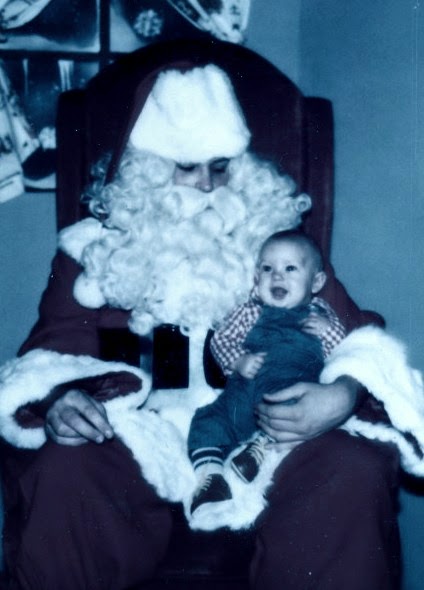
As we start our tale, we find ourselves in the 130 year old cottage which serves as the office of River Heights Consulting.  Frank Hurtte, the organization’s founder, seems totally absorbed in his work.  Glancing around the office, we see several mementos of Hurtte’s long association with Kris Kringle and the Santa Organization.  There’s a picture of Kringle carrying his legendary bag.  The likeness of Kris keeling in front of an ancient manger is prominently displayed near a time worn photo of a much younger Frank seated on Kris’ lap. 

The phone rings; the answer is a seasonal combination of Christmas Cheer and morning routine.  But in a flash, we see Hurtte spew some of his coffee and snap to attention.  The conversation goes like this:

FH:  River Heights Consulting, Frank Hurtte speaking.

Elf:  Frank, this is Elf Alabaster Snowball.  You don’t know me, but I know all about you, including that pouting incident back in 1962.  Kris Kringle and Santa have brought you lots of goodies over the years, like that Red Rider BB Gun way back when you were only 10.  And now we need your help.

FH:  Me?  I’m just a distributor guy.  How can I possibly help Santa and all my friends at the North Pole?

Elf:  It’s a long story, but Santa Enterprises needs some of that special Knowledge-based Distributor magic you are so fond of sharing with others.  Do you think distributors can help save Christmas?


For the next few moments, Elf Alabaster outlined the issues faced with parts shortages, machine down situations and the problems Santa’s kitchen faced with their spinach flavored sugar plums.  As a note taker, Frank listened, occasionally nodded in agreement and took copious notes.  Finally, Elf Alabaster Snowball asked, “Well, with all these issues, do you think distributors can save Christmas?”

Ever the consultant, Hurtte asked a few more poignant questions.  Logistics, delivery times and calculations rolled off his tongue like “On Comet, On Cupid, On Blitzen” out of Kris Kringle while driving the sleigh.  Working through a few issues on getting the right guys to Santa’s North Pole Headquarters and a couple thoughts on working special arrangements on territorial allowances, a plan was set.

River Heights Consulting and Santa Enterprises handpicked the top knowledge-based distributors in all the land.  Selecting on a basis of product knowledge, technical support, maintaining the right inventory, dedication to customer service and status on the naughty or nice list, an even dozen folks were plucked from a wide arrangement variety of wholesale lines of trade.  There were Salespeople, a couple of Product Specialists, a Customer Service Representative and Kris Kringle’s old pal Jimmy from the warehouse.

Because the North Pole is hard to get to by car, Santa Enterprises dispatched a team of reindeer to quickly shuttle each of these folks to the North Pole.  Time was of the essence.  The pressure was high, but this group has handled many a customer emergency.  Downtime, troubleshooting, part shortages, factory “work-arounds” and “making things happen” are part of the distributor skillset.  And while each member of this group could list hundreds of instances where they “saved the day.” none had ever saved such an important day.

Once at the North Pole, they met briefly with Kris and his team.  Everyone provided helpful information to describe their Elfian Department’s issues.  Well, almost everyone.  Elf Pricedrop was conspicuously absent from the meeting.  None of the other Elves said anything, instead they quickly shuttled the distributor team to the problem spots.

Quick as a wink, the group was making phone calls,
adjusting dials and pulling up drawings for alternative products on their iPads.  The hustle and bustle created by the distributor folks made the tap, tap, tap of elfin hammers in the toy shop seem like silence.  Suggestions were made, improvements set and emergency shipments lined up back in distributor warehouses around the country. 

To speed up the process, Santa put their fabled magic delivery team to work; this time bringing parts and pieces from distributors to the North Pole.  And, things started to happen.  Quickly.

With less than a day to go before Christmas, it was looking like Santa Enterprise’s reputation would be saved.  Christmas would go on.  Kris Kringle was once again jolly and joking. 

Because time was so short, Kris Kringle decided to write a very short letter to all the good folks in Distributor Land. 

“Santa can’t say or do enough to express the feeling of gratitude we have for the nice folks at the distributors who helped us save Christmas.  None of you want recognition.  All asked that their names not be shared when I appear on TV.  I and the whole Santa Organization will honor your request.  However, I want you to tell your children and grandchildren that Kris Kringle owes you a debt of gratitude.  And, if they don’t believe the story, just ask them to watch what happens next year when you bring them to see me in the big parade or at the mall.  If they watch closely, they will see me give you a knowing wink and hear me say, Ho, Ho, Ho.” 

Signed Kris Kringle – CEO Santa Enterprises North Pole

Oh because a few of you will ask, here’s the back side on Elf Pricedrop. 


Kris Kringle had one of his “special talks” with Pricedrop.  We think the formerly well-dressed Elf from procurement is starting to learn his lesson about price versus value.  No one is sure if he has changed but everyone likes seeing him work the shovel down at the reindeer barn.